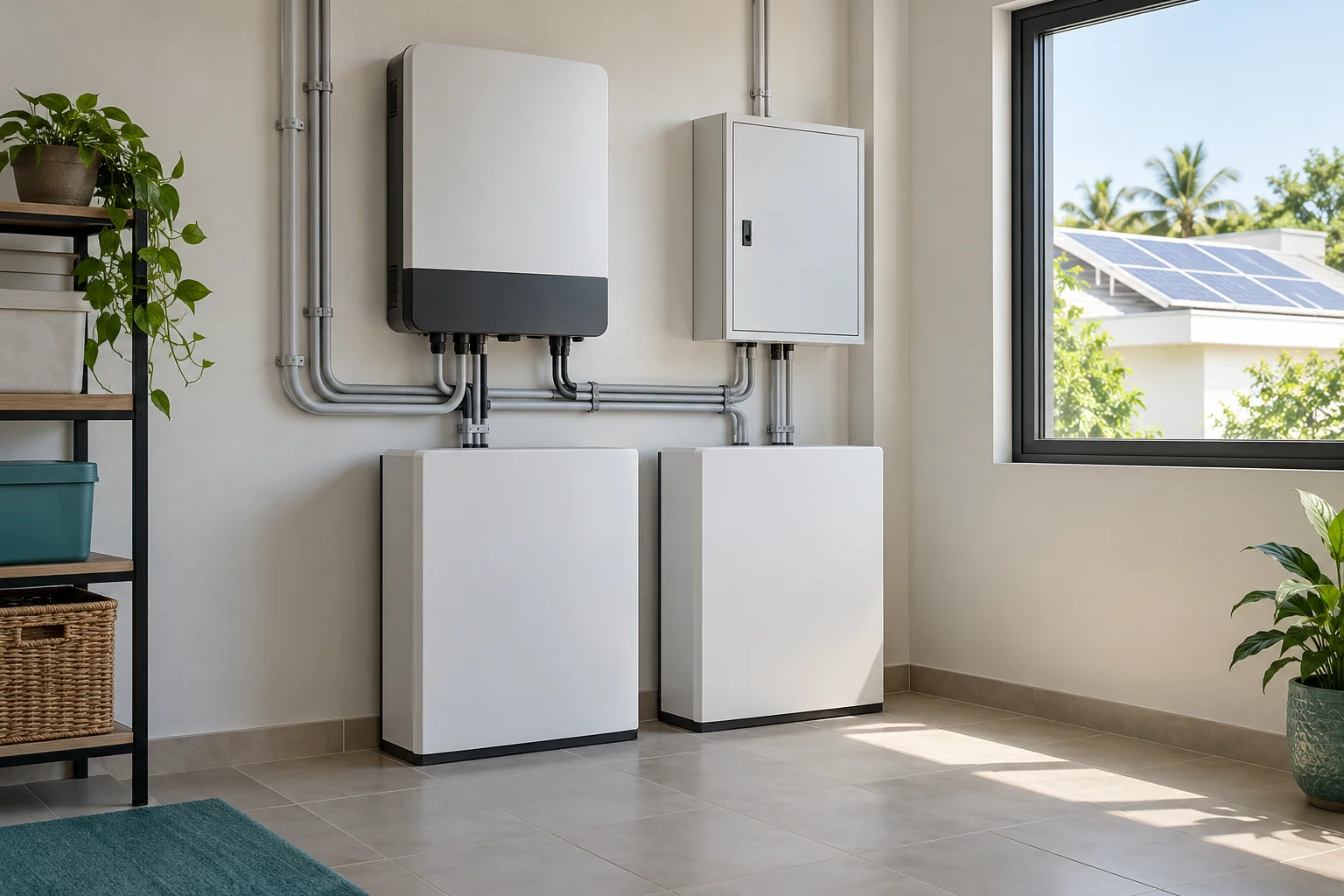
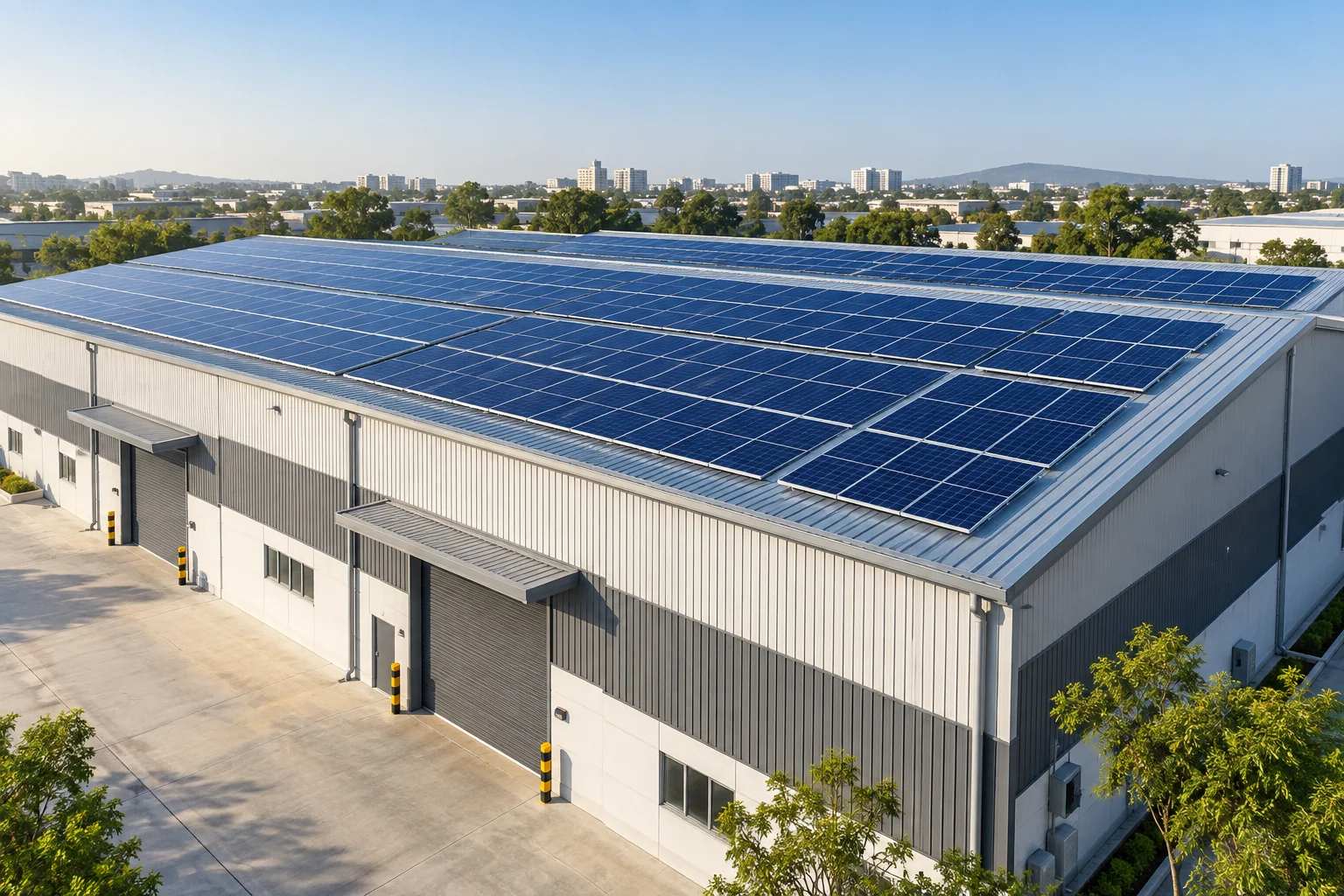
Power cuts, evening demand and unused daytime solar can call for different storage solutions. Tell us what you want to keep running, when you need it and whether you already have solar. We will check your requirements and look for a relevant independent provider to assess the site.
A battery stores electricity for later, but the right system depends on the problem you are trying to solve. A home that needs lights, fans and a refrigerator through an outage has a different brief from a factory managing short demand peaks. The first conversation should cover your priorities, daily usage, outage history and existing electrical setup.
SolarQuery helps turn that conversation into a clear service enquiry. A suitable provider can assess whether storage is practical, explain the integration work and prepare an itemised proposal. You choose the provider and agree the project directly with them. A battery is not automatically a whole-building backup solution, and the financial case should be checked against your actual usage and tariff.
What to include in the brief
A clear scope makes better conversations.
Choose the work you need, then agree the exact responsibilities with your provider.
01 / SCOPE
Load and backup assessment
List the appliances or processes that matter most, their operating hours and the interruptions you can tolerate. Ask the provider to separate essential loads from optional loads before recommending battery capacity or a backup arrangement.
02 / SCOPE
Storage system design
The design should identify usable energy, output power, charge sources and the equipment needed to control them. Request a simple explanation of what the proposed system can support during ordinary operation and an outage.
03 / SCOPE
Existing solar integration
Already have panels? A specialist can check your inverter, electrical drawings and operating history before selecting a compatible storage connection. The proposal should explain which equipment stays, which changes and any effect on existing warranties.
04 / SCOPE
Installation and commissioning
Agree the location, access arrangements, protection equipment and commissioning checks before work starts. The provider should demonstrate the approved operating modes, supply handover records and explain who to contact when the system needs attention.
05 / SCOPE
Business energy management
For commercial sites, share interval consumption data where available. Ask for an assessment of daytime generation, evening use, peak demand and diesel operation, with each proposed benefit tied to a measurable operating requirement.
06 / SCOPE
Ongoing storage care
Discuss monitoring, scheduled inspections, software support and response arrangements as part of the original scope. Keep maintenance responsibilities and warranty contacts clear so a later issue does not become a dispute between multiple suppliers.
Have a project in mind?
Tell us the location and the work required. Our team can help turn it into a clear enquiry.
Prioritise essential circuits and a realistic backup duration. Make sure the quotation states whether the system can recharge from solar during a power cut and how it behaves when the battery reaches its reserve level.
Commercial solar plus storage
Explore storage where your energy profile suggests a useful role beyond daylight hours or during short peaks. Request a comparison of alternatives, including operational changes, before committing to a larger energy storage installation.
Larger BESS projects
Campuses and industrial sites may need a battery energy storage system with dedicated controls, thermal management and a formal operating plan. Seek a provider whose engineering and maintenance experience matches the scale of your project.
A useful proposal connects the work, the site conditions and the responsibilities in writing.
Before you commit
The details worth discussing.
Capacity and output are different
Battery capacity, measured in kWh, describes stored energy. Output power, measured in kW, affects what can run at the same time. Ask the provider to show both usable capacity and supported loads, including equipment that needs extra starting power.
Backup must be designed explicitly
Do not assume an ordinary grid-connected solar installation will work during a power cut. Ask for a written backup scope covering selected circuits, changeover behaviour, operating limits and whether solar charging remains available when the grid is unavailable.
Choose a suitable installation location
Have the installer assess heat, moisture, ventilation, access and the manufacturer’s location requirements. For larger systems, request an explanation of thermal and fire protection, emergency access and operating procedures. Battery enclosures should only be serviced by appropriately qualified personnel.
Compare the whole ownership cost
Review installation, control equipment, maintenance, replacement assumptions and warranty conditions together. If a proposal promises savings, ask how tariffs, battery ageing and energy losses were handled. Keep backup value separate from any projected reduction in the electricity bill.
Cost and scope
Understand what shapes the quotation.
A useful battery storage quotation starts with your load profile, not just a price per battery. Ask for equipment, design, installation, controls, commissioning and support to be shown separately. Compare proposals that provide the same backup scope and usable capacity; a cheaper headline price may cover a different job.
Usable storage capacity and required output power
Existing inverter compatibility and electrical alterations
Battery location, access and environmental protection
Monitoring, maintenance, warranty and replacement terms
From enquiry to provider conversation
A straightforward way to get started.
01 / YOUR REQUIREMENT
Tell us about the work.
Share the service, project PIN code and a short description. You can say you are unsure about the technical details.
02 / A CLEARER BRIEF
We confirm the details.
Our team follows up to understand the site and collect the information needed for a relevant provider enquiry.
03 / YOUR CHOICE
Discuss the next step.
We check for relevant local providers. If an introduction is possible, you compare the proposal and decide whether to proceed.
Tell us what you need
Let’s make the next step clear.
You do not need a finished specification. A few details help our team understand the job and check for suitable providers in your area.
Your PIN code, property type and usual outage pattern
A recent electricity bill and available consumption history
Essential appliances or processes and desired backup duration
Existing solar capacity, inverter model and installation records
Photographs of accessible equipment and proposed location, taken safely
Free to enquire. You choose whether to accept a provider’s proposal. Project scope, contracts and payments are agreed directly with your chosen provider.
Explore the market
Service providers to explore.
A starting point for understanding the types of businesses working in this field.
These independent companies describe relevant services on their own websites. They are not a ranking or a list of confirmed SolarQuery partners. Check project size, location, service scope and current availability directly. For a SolarQuery introduction, send your requirement to our team.
Brand names are mentioned for information only; SolarQuery is not affiliated with these companies unless stated.
AI
Aggreko India
Offers commercial and industrial battery storage rental with system integration and support. A relevant option to investigate for temporary or changing site requirements.
Describes BESS integration for commercial, industrial and utility energy projects, with monitoring and operating support. Suitability depends on project scale and commercial assessment.
Offers solar-plus-storage engineering, AC and DC integration, battery performance analysis and maintenance. Its published work is oriented toward substantial renewable-energy projects.
Can I add a battery to my existing rooftop solar system?
Often this can be assessed without replacing the whole installation, but compatibility is not automatic. Share the inverter model and system documents. A provider should compare suitable integration options, explain changes to controls and protection, and confirm how the proposed arrangement affects warranties and grid permissions.
Will a solar battery run my entire home during a power cut?
Only if the system is designed for the required loads and duration. Many installations support selected essential circuits. Ask for a list of supported appliances, simultaneous-load limits and expected runtime under stated conditions. A storage system is also not automatically an uninterrupted power supply for sensitive equipment.
How much battery capacity do I need?
It depends on the power your selected loads draw and how long they must operate. A provider should also consider starting loads, usable battery capacity and the intended reserve. Give them a practical priority list rather than asking them to match the battery size to panel capacity alone.
Is battery storage always worth the investment?
No single answer fits every property. Storage may be useful for resilience or better use of solar, but those benefits do not guarantee a short payback. Request a comparison using your consumption pattern, applicable tariff, operating assumptions and full installed cost before deciding whether to proceed.
Who supplies and supports the installation?
Your selected independent provider is responsible for its agreed design, installation and support scope. SolarQuery connects customers with relevant providers after checking the enquiry; we do not install equipment or collect the project payment. Local availability and the final technical solution must be confirmed before work is agreed.
Keep exploring
Another service might be a better fit.
If your project crosses more than one category, tell us in your enquiry. You do not need to start again for every requirement.