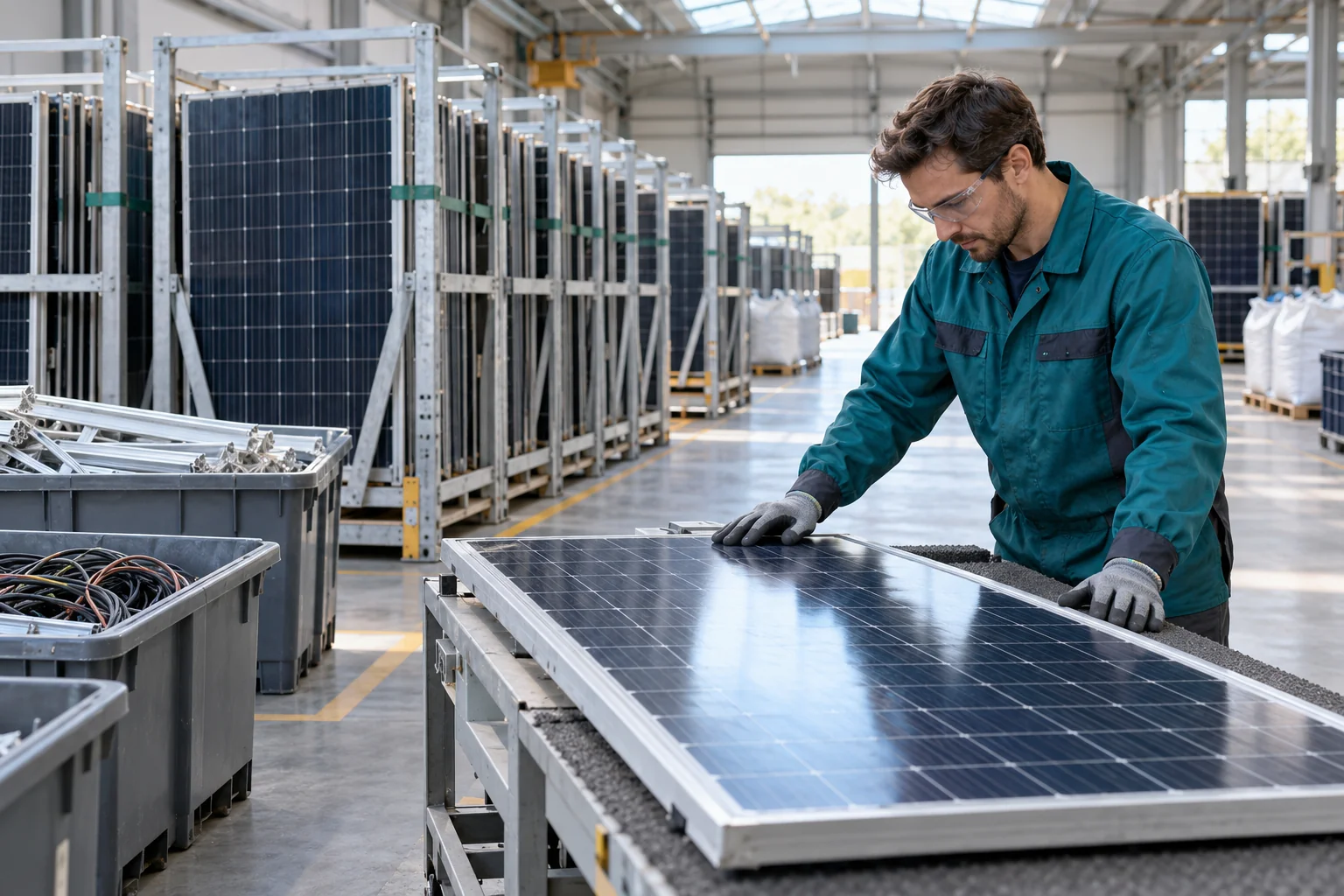
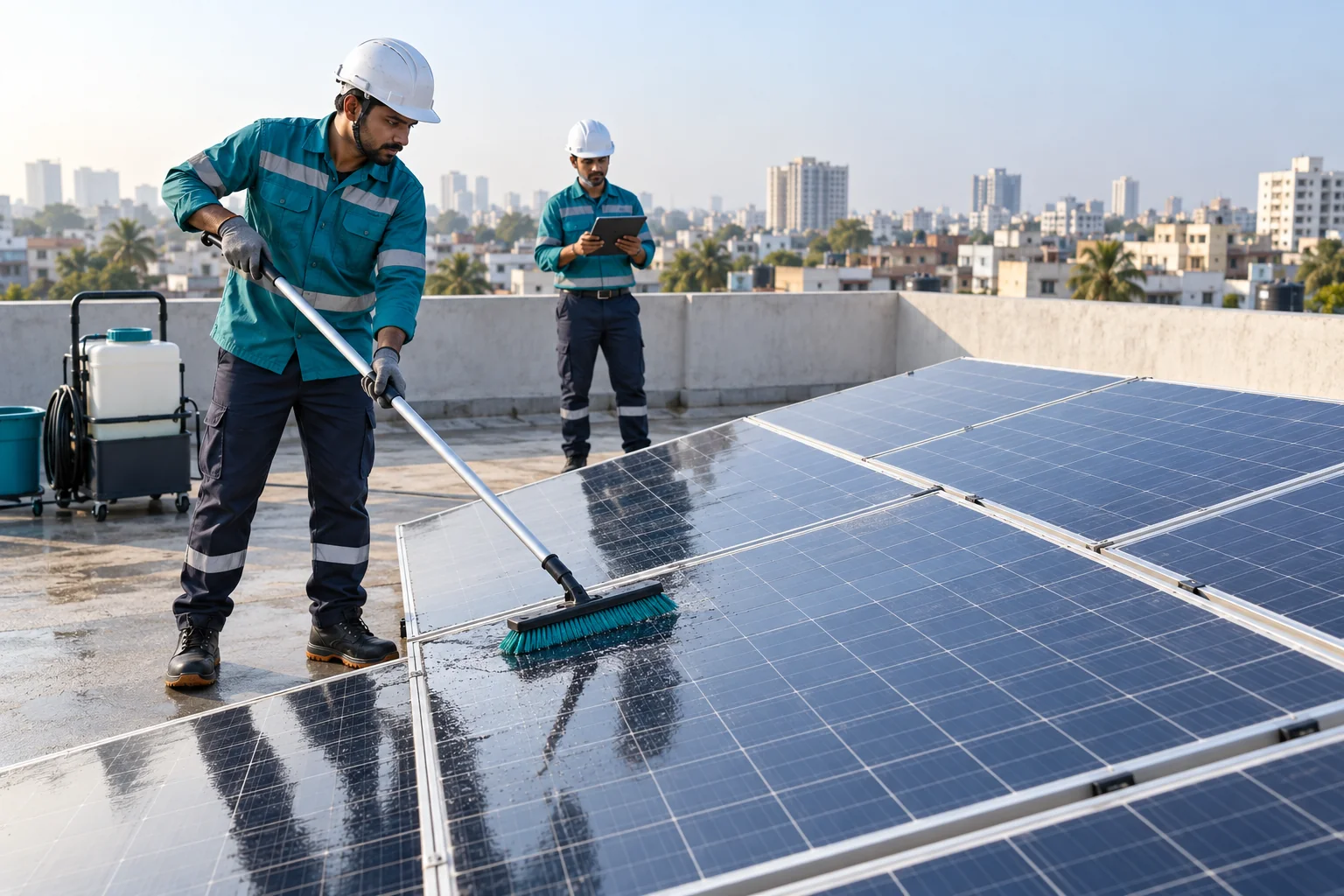
A responsible plan for solar removal and recycling
Replacing damaged panels, renovating a roof or retiring a solar plant? Plan what happens to the equipment before removal begins. SolarQuery can help clarify the job and check for independent providers for dismantling, collection and recycling support. The right route depends on the equipment, its condition, your site and the receiving facility.
Removal is a project, not simply a scrap collection
An unwanted solar system may still contain serviceable equipment, damaged modules and components that need different handling routes. Start by identifying what is installed, who owns it and why it is being removed. A warranty replacement, temporary roof repair and permanent plant closure need different plans. Do not assume the business collecting equipment is also the facility that will process it.
A useful scope brings together qualified electrical work, roof or site access, lifting arrangements, transport and the final destination. It should also explain what happens to cables, structures, inverters and batteries. SolarQuery is a connection platform, not a recycler or waste-certification body. Ask each provider to identify its role and the registrations, permissions and records relevant to that role.
What to include in the brief
A clear scope makes better conversations.
Choose the work you need, then agree the exact responsibilities with your provider.
01 / SCOPE
Equipment inventory and assessment
Create a practical record of module models, approximate quantities, condition and accessible serial numbers. Ask whether the equipment should be checked for repair, manufacturer return or another suitable route before committing everything to disposal.
02 / SCOPE
Decommissioning scope planning
Agree which parts of the system will be removed and which must remain operational. Identify the electrical contractor, site-access arrangements and responsibilities for making the work area safe, with a schedule suited to your building or plant.
03 / SCOPE
Panel removal coordination
Discuss roof height, access restrictions, lifting needs and protection of the surrounding property. The proposal should explain who arranges specialist labour and equipment, and how existing roof defects or unexpected conditions will be managed.
04 / SCOPE
Collection and transport
Share the pickup location, equipment type and condition before booking. Confirm the receiving party and agreed packaging arrangements. Record what leaves the site, who takes custody and whether any materials require a separate collection.
05 / SCOPE
Recycling and take-back enquiries
Ask whether the facility accepts your specific module technology and condition. Manufacturer take-back and specialist recycling services can have different requirements, so confirm acceptance and the responsible receiving entity before dismantling or dispatch.
06 / SCOPE
Site closure and documentation
Request a record of equipment removed, destination and completed work. Where the project includes roof reinstatement, disposal documentation or connection changes, name the party responsible and the evidence you will receive before final payment.
Have a project in mind?
Tell us the location and the work required. Our team can help turn it into a clear enquiry.
Panels may need temporary removal rather than retirement. Ask for an assessment of reuse, storage and reinstallation, including roof repairs and any effect on existing warranties. Define responsibility for equipment condition at each handover.
Damaged or replaced modules
Start with the installer, manufacturer and any applicable warranty process. Record the damage and proposed replacements, then confirm the appropriate route for rejected modules. Do not assume a warranty claim includes collection or recycling.
Plant closure or repowering
Larger projects need coordinated scopes for electrical disconnection, equipment movement, land or roof restoration and records. Assess the overall project commitment, including transport and processing, before relying on any estimated scrap or recovery value.
A useful proposal connects the work, the site conditions and the responsibilities in writing.
Before you commit
The details worth discussing.
Verify the receiving facility
For solar waste intended for recycling, check the relevant registration and the actual receiving facility before handover. A collection agent's trading name is not enough. Ask how the proposed arrangement meets the applicable CPCB requirements and who is accountable for each stage.
Keep different equipment streams clear
Modules, batteries, inverters and structural materials should not be treated as one undifferentiated load. Identify them in the proposal so the provider can confirm appropriate destinations. Ask specifically whether battery handling is included or requires a separate qualified business.
Make room for safe storage
If collection follows removal, agree who manages the intervening storage and protects people, property and the environment. Broken modules need particular care. Ask the provider to set out arrangements appropriate to the site and current handling requirements before work starts.
Read recovery claims carefully
Do not assume every component will be recycled, every module will have a resale value or every certificate proves the same thing. Ask what the document records and which facility issued it. Solar PV waste has specific rules; generic EPR promises need careful checking.
Cost and scope
Understand what shapes the quotation.
Removal and recycling costs depend on access, equipment condition, volume, transport distance and the receiving facility's terms. Material value may offset part of the job, but it is not guaranteed to cover the work. Compare the complete scope and the evidence of proper handover, not just a quoted scrap rate.
Roof or ground access, isolation and lifting requirements
Module quantity, technology, damage and packaging needs
Transport distance and the accepting facility's charges
Restoration work, documentation and treatment of recovered value
From enquiry to provider conversation
A straightforward way to get started.
01 / YOUR REQUIREMENT
Tell us about the work.
Share the service, project PIN code and a short description. You can say you are unsure about the technical details.
02 / A CLEARER BRIEF
We confirm the details.
Our team follows up to understand the site and collect the information needed for a relevant provider enquiry.
03 / YOUR CHOICE
Discuss the next step.
We check for relevant local providers. If an introduction is possible, you compare the proposal and decide whether to proceed.
Tell us what you need
Let’s make the next step clear.
You do not need a finished specification. A few details help our team understand the job and check for suitable providers in your area.
Site PIN code and roof or ground-mounted location
Approximate number of panels and other equipment
Reason for removal and any warranty claim
Module brand or technology, if known, and visible condition
Access limitations, preferred dates and site-restoration needs
Free to enquire. You choose whether to accept a provider’s proposal. Project scope, contracts and payments are agreed directly with your chosen provider.
Explore the market
Service providers to explore.
A starting point for understanding the types of businesses working in this field.
These independent companies describe relevant services on their own websites. They are not a ranking or a list of confirmed SolarQuery partners. Check project size, location, service scope and current availability directly. For a SolarQuery introduction, send your requirement to our team.
Brand names are mentioned for information only; SolarQuery is not affiliated with these companies unless stated.
FS
First Solar
Operates a solar PV recycling facility in Tamil Nadu and offers recycling-service agreements. Confirm whether your module technology and collection requirement are accepted.
Surat-based business describing solar-panel collection, transport and material-recovery services. Verify the receiving facility, current registrations and agreed documentation before arranging a collection.
Can working solar panels be reused instead of recycled?
Possibly. Condition, safety, performance, ownership and the intended use need assessment first. Reuse should be a documented decision, not a way of passing damaged equipment to someone else. Ask a competent provider to explain the proposed route and whether any warranty or contractual restrictions apply.
Who should receive waste solar panels in India?
CPCB's March 2026 guidelines direct solar waste intended for recycling to registered e-waste recyclers, while registered producers or manufacturers may receive it for collection and storage. Verify the actual receiving entity, its current status and acceptance of your modules before arranging handover.
Does a recycling company also remove panels from my roof?
Not necessarily. Some businesses accept delivered modules or arrange collection, while electrical disconnection and rooftop dismantling require a separate scope. Ask who performs each activity, whether those costs are included and who takes responsibility for the equipment between removal and receipt.
Will I receive money for old solar panels?
There is no universal buy-back value. Equipment condition, recoverable materials, logistics and processing costs influence the commercial terms. Ask for a written offer showing collection and treatment charges separately from any material credit, and check whether that offer can change after inspection.
Are solar recycling certificates the same as EPR credits?
No. A receipt or treatment record should not automatically be treated as an EPR credit. CPCB's March 2026 guidance states that general e-waste recycling targets currently do not apply to solar PV modules, panels or cells. Ask the provider to explain exactly what its document establishes.
Keep exploring
Another service might be a better fit.
If your project crosses more than one category, tell us in your enquiry. You do not need to start again for every requirement.