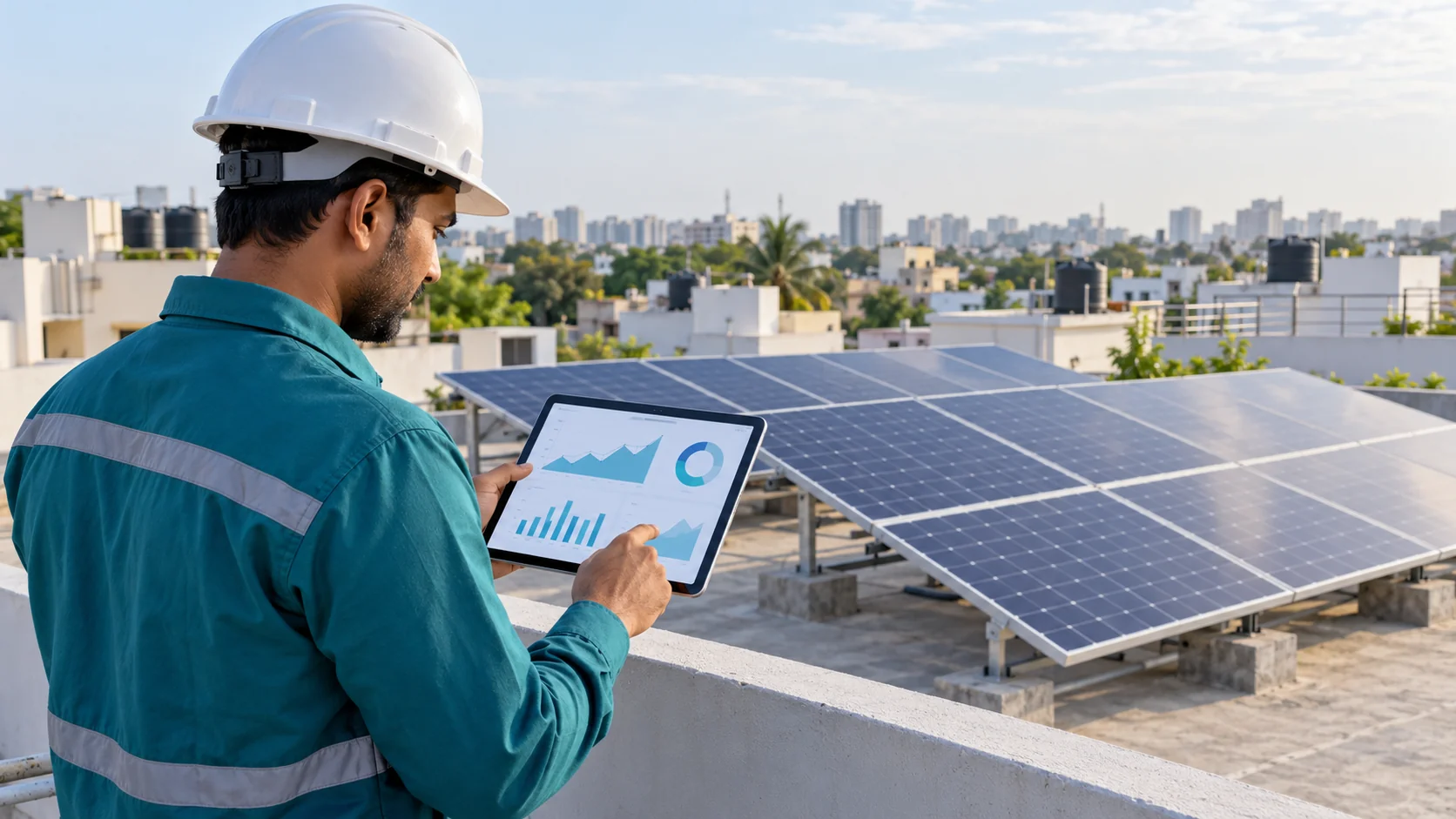
See what your solar is doing, and what needs attention
A useful solar dashboard should answer practical questions: is the system working, where is the electricity going and does anything need attention? Whether you manage one rooftop or several sites, we can help you describe the visibility you need and look for a provider who can make it useful.
Generation figures tell only part of the story. You may also want to understand grid imports, exported electricity, battery behaviour or the hours when the building uses most power. The right monitoring setup depends on which questions matter and what your existing equipment can measure. Start there before choosing another app or dashboard.
A specialist can review compatibility, metering and communication needs, then explain what the proposed service will show. For a business, this may extend to remote oversight, site comparisons and maintenance alerts. SolarQuery helps you clarify that brief and seek a suitable independent provider. The provider’s agreement should state who reviews alerts, who contacts you and who acts when the data indicates a problem.
What to include in the brief
A clear scope makes better conversations.
Choose the work you need, then agree the exact responsibilities with your provider.
01 / SCOPE
Monitoring setup and restoration
Get help reviewing an existing portal, reconnecting supported equipment or setting up a new monitoring arrangement. Ask the provider to confirm ownership of the account, supported devices and the information you should expect to see.
02 / SCOPE
Generation performance tracking
Track output over useful time periods and ask for changes to be explained in context. A clear report should distinguish seasonal variation, missing data, downtime and suspected underperformance rather than present every difference as an equipment fault.
03 / SCOPE
Consumption and energy-flow visibility
Where suitable metering is installed, compare electricity generated, used on site, imported and exported. Request an explanation of which flows are measured directly and which are estimated, so the display does not imply more certainty than the hardware provides.
04 / SCOPE
Fault alerts and escalation
Agree which alerts matter, who receives them and what happens next. A notification without a response plan can still leave a fault unattended. Ask about support hours, acknowledgements and the route from an alert to an inspection.
05 / SCOPE
Multi-site and plant monitoring
Businesses with several installations can explore a shared view across sites, supported equipment and reporting periods. Define the comparisons you need and confirm that differences in plant size, weather and operating conditions are handled sensibly.
06 / SCOPE
Smart energy and control assessment
If you want loads, batteries or charging to respond to solar availability, discuss the operating rules before enabling control. Ask the specialist to distinguish a read-only monitoring service from equipment that can actively change site operation.
Have a project in mind?
Tell us the location and the work required. Our team can help turn it into a clear enquiry.
A straightforward view of generation and fault messages may meet your immediate needs. Consider extra consumption metering only when it answers a practical question, such as when to run flexible appliances or whether storage deserves further assessment.
Business performance oversight
Ask for reports that help your facilities team take action: downtime, unresolved alarms, generation trends and maintenance follow-up. Specify who owns each decision and how the monitoring provider coordinates with the on-site service team.
An integrated energy-management brief
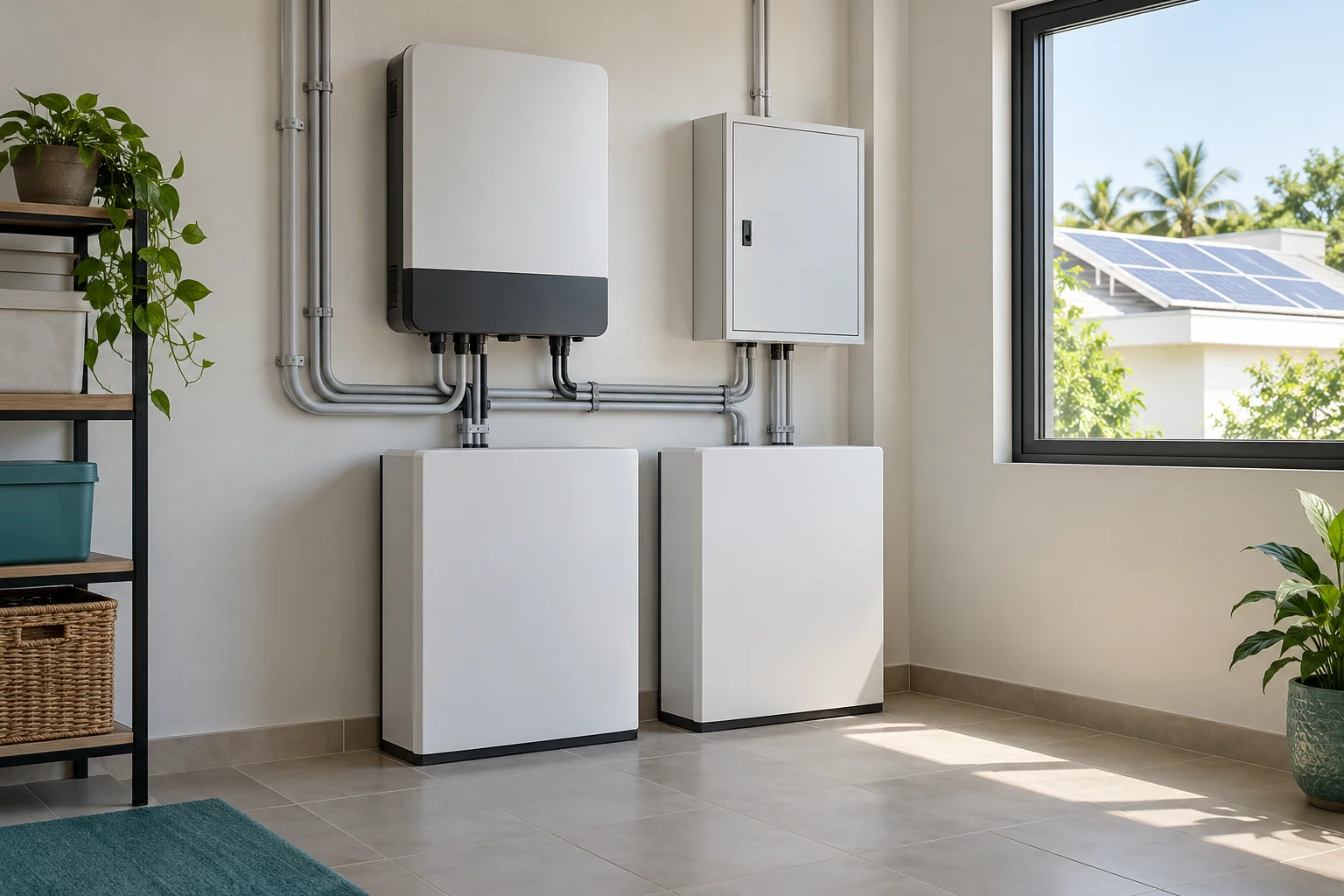
For sites combining solar, storage and other loads, start with operating priorities and equipment compatibility. A specialist can assess metering and control requirements, then set out the limits, responsibilities and expected behaviour of the proposed system.
A useful proposal connects the work, the site conditions and the responsibilities in writing.
Before you commit
The details worth discussing.
Know what the equipment measures
An inverter app may show solar generation without measuring the building’s total consumption. Ask which additional meters or sensors are required for the information you want. A polished dashboard is only useful if the underlying measurements support the conclusions drawn from it.
Plan for missing connectivity
Discuss the site’s internet connection and what happens when it drops. Ask whether the system buffers readings, how missing data is displayed and who troubleshoots communication faults. A blank graph should not be confused automatically with a plant that has stopped generating.
Keep control of access and data
Request your own authorised account and an explanation of installer access, exported reports and subscription terms. Ask who can change settings and how access is revoked when contractors change. Avoid sharing passwords through an enquiry form; access should be arranged securely.
Agree the meaning of savings figures
Ask how any financial estimate treats self-consumed energy, export credits, tariffs and charges. Keep measured energy separate from projected savings. Your electricity bill and the applicable billing arrangement remain important checks when an app displays a monetary result.
Cost and scope
Understand what shapes the quotation.
Monitoring can involve an existing inverter portal, additional meters, a communications gateway or an ongoing service. Ask for setup costs, hardware, connectivity, subscriptions and support to be itemised. Compare what each option measures and who responds to problems; a dashboard licence and a managed monitoring service are different commitments.
Number of sites, devices and supported equipment brands
Additional meters, sensors and communications equipment
Report detail, integrations and remote-service scope
Subscription term, connectivity and support responsibilities
From enquiry to provider conversation
A straightforward way to get started.
01 / YOUR REQUIREMENT
Tell us about the work.
Share the service, project PIN code and a short description. You can say you are unsure about the technical details.
02 / A CLEARER BRIEF
We confirm the details.
Our team follows up to understand the site and collect the information needed for a relevant provider enquiry.
03 / YOUR CHOICE
Discuss the next step.
We check for relevant local providers. If an introduction is possible, you compare the proposal and decide whether to proceed.
Tell us what you need
Let’s make the next step clear.
You do not need a finished specification. A few details help our team understand the job and check for suitable providers in your area.
PIN code, installation size and number of sites
Inverter, battery and existing monitoring equipment details
The main questions you want the system to answer
Internet availability and known data or connection problems
Who should receive reports, alerts and authorised account access
Free to enquire. You choose whether to accept a provider’s proposal. Project scope, contracts and payments are agreed directly with your chosen provider.
Explore the market
Service providers to explore.
A starting point for understanding the types of businesses working in this field.
These independent companies describe relevant services on their own websites. They are not a ranking or a list of confirmed SolarQuery partners. Check project size, location, service scope and current availability directly. For a SolarQuery introduction, send your requirement to our team.
Brand names are mentioned for information only; SolarQuery is not affiliated with these companies unless stated.
JI
JUWI India
Describes continuous solar-plant monitoring from its Bengaluru control room, alongside maintenance and reporting. Its offering is relevant to operators seeking managed plant oversight.
Offers renewable-asset remote monitoring and analytics, including SolarPulse. Ask about supported equipment, reporting, account access and the division between monitoring and on-site maintenance.
Can I add monitoring to an existing solar installation?
Often there are retrofit options, but compatibility and available measurements must be checked. Share the inverter model and current monitoring setup. Ask the provider which information can be retrieved already, which requires new hardware and whether the service supports your specific equipment without affecting warranty conditions.
Does my solar app show how much electricity my home uses?
Not always. A generation-only app may show what the solar system produces but not total household consumption or grid imports. Additional compatible metering may be needed. Ask the provider to identify measured and estimated values and explain how energy flows will appear in your particular setup.
My monitoring app is offline. Has the solar system stopped?
An offline app can indicate a communications problem rather than a generation failure. Check only safely accessible, ordinary status information and note when the connection was lost. Ask your support provider to investigate. Do not open equipment or change electrical settings just to restore a dashboard connection.
Will remote monitoring automatically fix faults?
Monitoring can flag an issue, but many faults still need review or an on-site visit. Some systems support authorised remote functions, which must be agreed and controlled. Ask who receives alerts, how they are assessed and how a repair is arranged instead of assuming every notification triggers immediate action.
Can smart energy management lower my electricity bill?
It may help identify useful changes, but the outcome depends on the site, tariff, equipment and how recommendations are used. Ask for a proposal based on your actual energy pattern. Distinguish measurement, advice and automatic control, and avoid treating an app’s projected savings as a guaranteed financial result.
Keep exploring
Another service might be a better fit.
If your project crosses more than one category, tell us in your enquiry. You do not need to start again for every requirement.